Near AIIMS Phulwari Sharif Patna
 [email protected]
 7369848448
 Near AIIMS Phulwari Sharif Patna[email protected]7369848448
A focused analytics program covering data preparation, dashboard development and business reporting using Power BI and Tableau.
This course will develop your potential and confidence.
An extended Data Science training program covering programming, analytics, visualization and machine-learning fundamentals.
A practical Data Science program covering data handling, analysis, visualization and introductory machine-learning concepts.
Cupping Therapy (CT) is an ancient method and currently used in the treatment of a broad range of medical conditions. Nonetheless the mechanism of action of (CT) is not fully understood. This review aimed to identify possible mechanisms of action of (CT) from modern medicine perspective and offer possible explanations of its effects. English literature in PubMed, Cochrane Library and Google Scholar was searched using key words. Only 223 articles identified, 149 records screened, and 74 articles excluded for irrelevancy. Only 75 full-text articles were assessed for eligibility, included studies in this review were 64. Six theories have been suggested to explain the effects produced by cupping therapy. Pain reduction and changes in biomechanical properties of the skin could be explained by “Pain-Gate Theory”, “Diffuse Noxious Inhibitory Controls” and “Reflex zone theory”. Muscle relaxation, changes in local tissue structures and increase in blood circulation might be explained by “Nitric Oxide theory”. Immunological effects and hormonal adjustments might be attributed to “Activation of immune system theory”. Releasing of toxins and removal of wastes and heavy metals might be explained by “Blood Detoxification Theory”. These theories may overlap or work interchangeably to produce various therapeutic effects in specific ailments and diseases.
Anatomy
Physiology
Yin and Yang
Cupping Technique
Case Studies
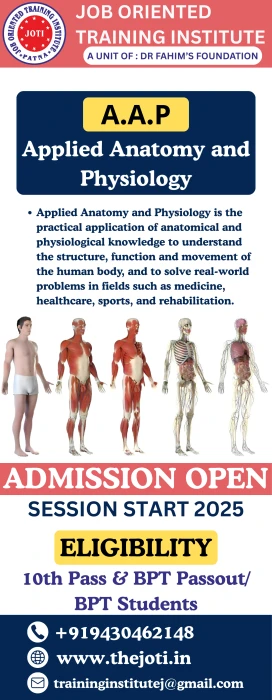
Course Description: This course is designed to provide medical students with a comprehensive understanding of the human body's structure and function, with an emphasis on applying anatomical and physiological knowledge to clinical practice. Course Outline: Module 1: Introduction to Anatomy and Physiology - Overview of anatomy and physiology - Importance of anatomy and physiology in medicine - Basic concepts and terminology Module 2: Musculoskeletal System - Bones and joints - Muscles and movements - Anatomy and physiology of the musculoskeletal system - Clinical applications and case studies Module 3: Nervous System - Brain and spinal cord - Nerves and sensory systems - Anatomy and physiology of the nervous system - Clinical applications and case studies Module 4: Circulatory System - Heart and blood vessels - Blood pressure and circulation - Anatomy and physiology of the circulatory system - Clinical applications and case studies Module 5: Respiratory System - Lungs and airways - Breathing mechanisms and respiration - Anatomy and physiology of the respiratory system - Clinical applications and case studies Module 6: Digestive System - Mouth, esophagus, stomach, small intestine, and large intestine - Anatomy and physiology of the digestive system - Clinical applications and case studies Module 7: Integumentary System - Skin, hair, nails, and related glands - Anatomy and physiology of the integumentary system - Clinical applications and case studies Module 8: Applied Anatomy and Physiology - Case studies and clinical applications - Integration of anatomical and physiological knowledge - Problem-solving and critical thinking Assessment: - Written exams (40%) - Practical exams (30%) - Group projects and presentations (20%) - Clinical case studies and discussions (10%)